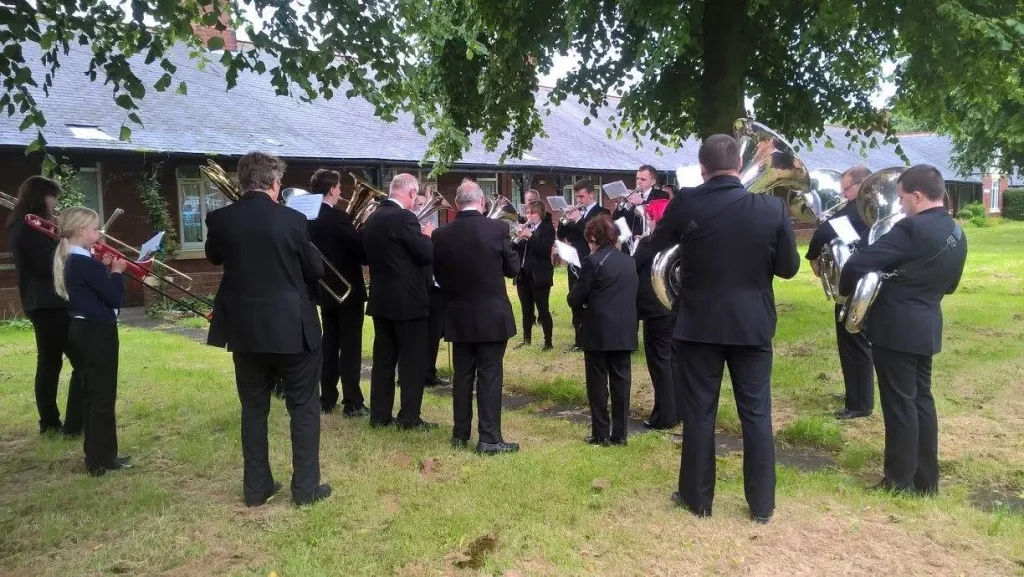
A colliery band is a brass band that grew out of a coal-mining community. In the nineteenth and twentieth centuries many pit villages across Britain had one, supported by the colliery or by the miners themselves, with players drawn from the pit and their families. Many survive today as community bands that keep the colliery name, including Backworth Colliery Band in North Tyneside, founded in 1886.
Where colliery bands came from
Brass bands took off in Victorian Britain. Valves made brass instruments fully melodic from the 1830s, instruments became cheaper to make, and a band gave working people music they could make for themselves. Mills, works, churches, temperance societies and volunteer regiments all formed bands, and so did the collieries.
In a pit village, the band belonged to everyone. Colliery owners often helped pay for instruments and uniforms, alongside subscriptions from the miners, and from the 1920s many bands rehearsed in miners’ welfare halls, paid for by a levy on every ton of coal mined. Backworth’s band rehearsed in the Miners’ Welfare, across the road from Backworth Club, for nearly 80 years.
What made a colliery band different
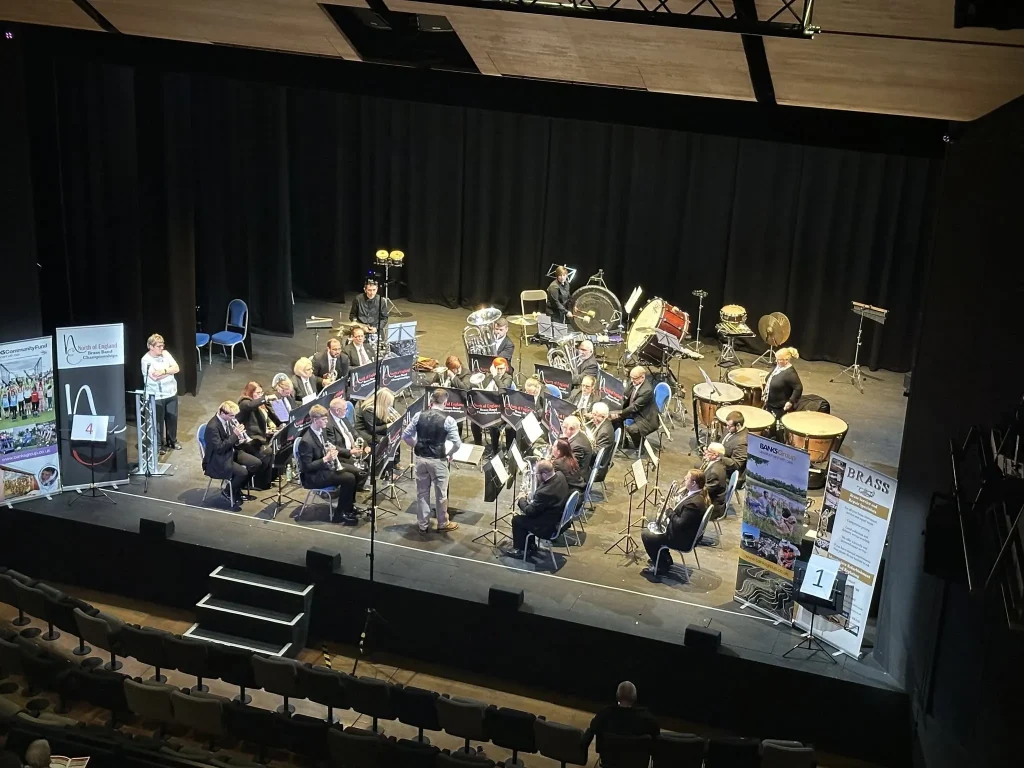
Musically, a colliery band is the same as any other brass band: around 25 players on cornets, flugel horn, tenor horns, baritones, euphoniums, trombones and basses, plus percussion. What set colliery bands apart was who played, and why.
- The players were the community. Miners and their families learned to play in the village band, and many played in it all their lives.
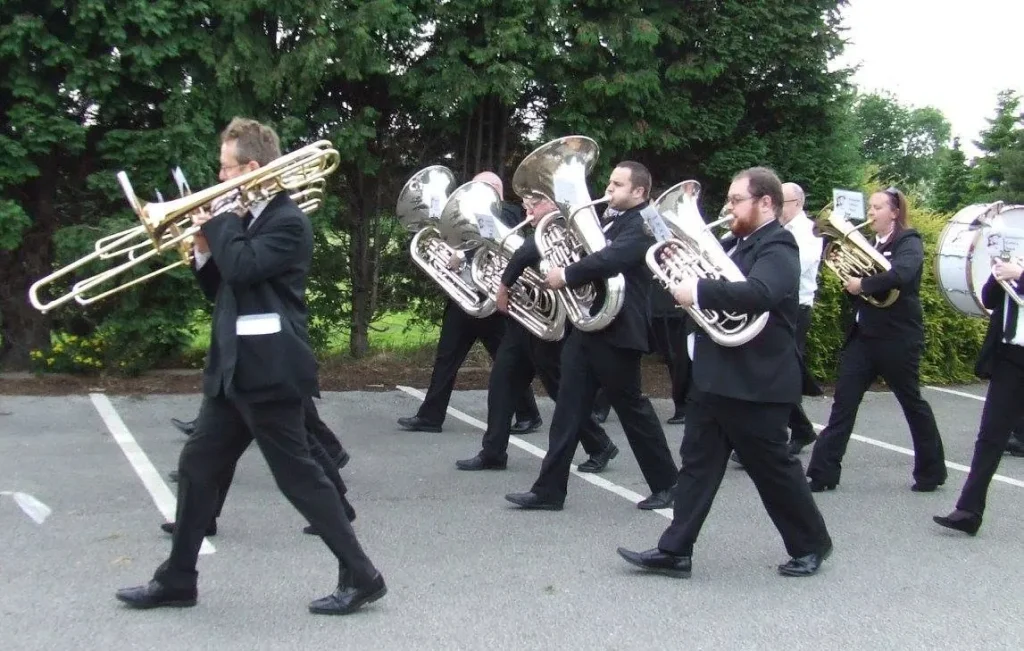
- The band marked the village’s year. It led galas and parades, played for chapels, at Remembrance and at funerals, and on bandstands on summer evenings.
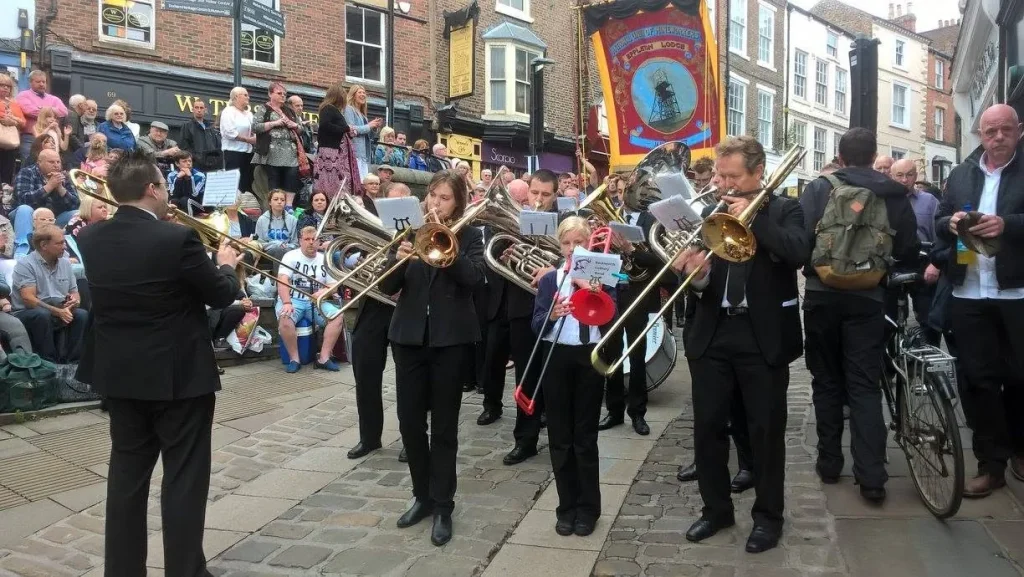
- It marched with the banner. At the Durham Miners’ Gala, first held in 1871, the colliery lodges march into the city behind their banners and their bands, a tradition that still fills Durham every July.
- It competed. Contests gave pit villages a way to measure themselves against each other. Backworth took its first recorded win at Cramlington in 1883, and played at the Crystal Palace national contests in the 1930s.
When the pits closed
Britain’s collieries were nationalised in 1947, and many bands were then supported through the National Coal Board and the miners’ welfare organisations. As the pits closed, that support went with them. Some bands folded, others merged, and many became community bands open to anyone.
The 1996 film Brassed Off told that story, following a colliery band as its pit faces closure, with music played by Grimethorpe Colliery Band. At Backworth, the last pit, the Eccles, closed in May 1980, ending 167 years of deep mining. The band kept playing.
Colliery bands today
Most colliery bands now have no link to a working mine, because almost none are left. What they keep is the name, the music and their place in the community. Their players come from every walk of life, many bands run training bands for beginners, and they still turn out for the occasions that mattered in the pit villages: the Durham Miners’ Gala, Remembrance, Christmas carols and local galas.
Questions about colliery bands
Do you have to be a miner to join a colliery band?
No. Colliery bands today are community bands and welcome players of any background. Backworth Colliery Band welcomes experienced and returning players, and its Training Band teaches beginners.
What does a colliery band play?
Everything a brass band plays: marches and hymns, contest test pieces, classical arrangements, film and show music, popular songs and Christmas music. Some pieces have a special place, such as the hymn Gresford, written by Robert Saint of Hebburn in memory of the miners killed in the 1934 Gresford disaster and often called the miners’ hymn.
Are there still colliery bands?
Yes. Dozens of bands across Britain’s former coalfields still carry “Colliery” in their name, from Grimethorpe in Yorkshire to Backworth in North Tyneside.
Where can I hear a colliery band?
At the Durham Miners’ Gala each July, at Remembrance parades, at brass band contests and at local concerts. See where Backworth Colliery Band is playing next on our events page.
Backworth Colliery Band
Backworth Colliery Band was founded in 1886 in the mining community of Backworth, North Tyneside, and celebrates 140 years in 2026. Read the full story on our history page, find out how the region’s bands grew up in How Colliery Bands Shaped the North East, or come and play with us.