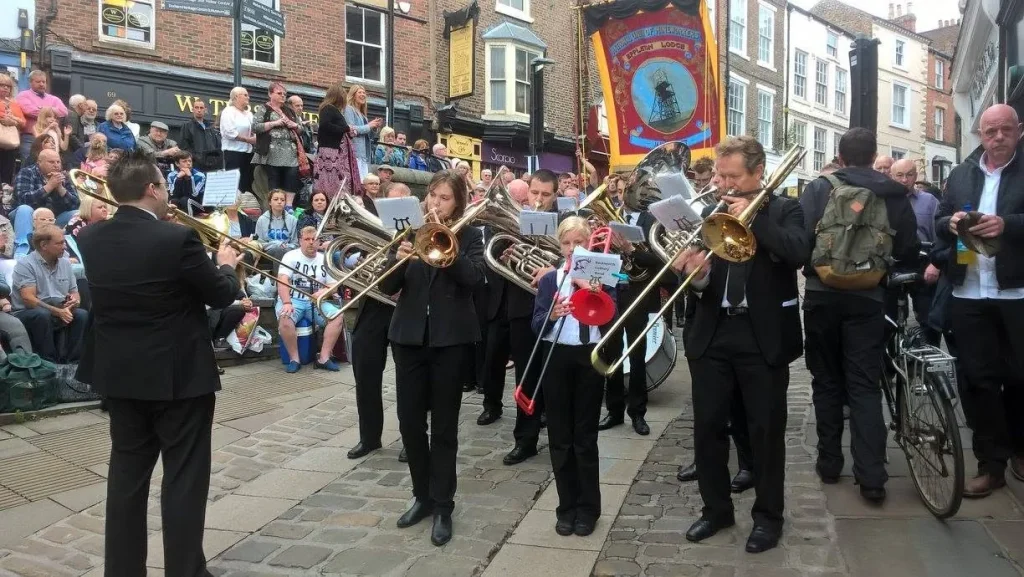
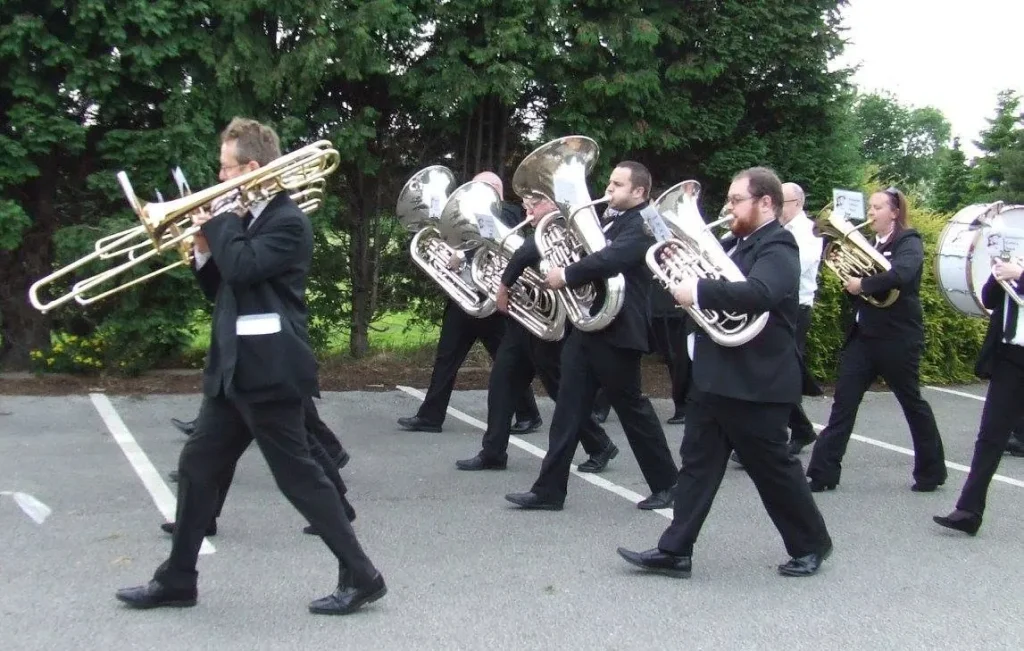
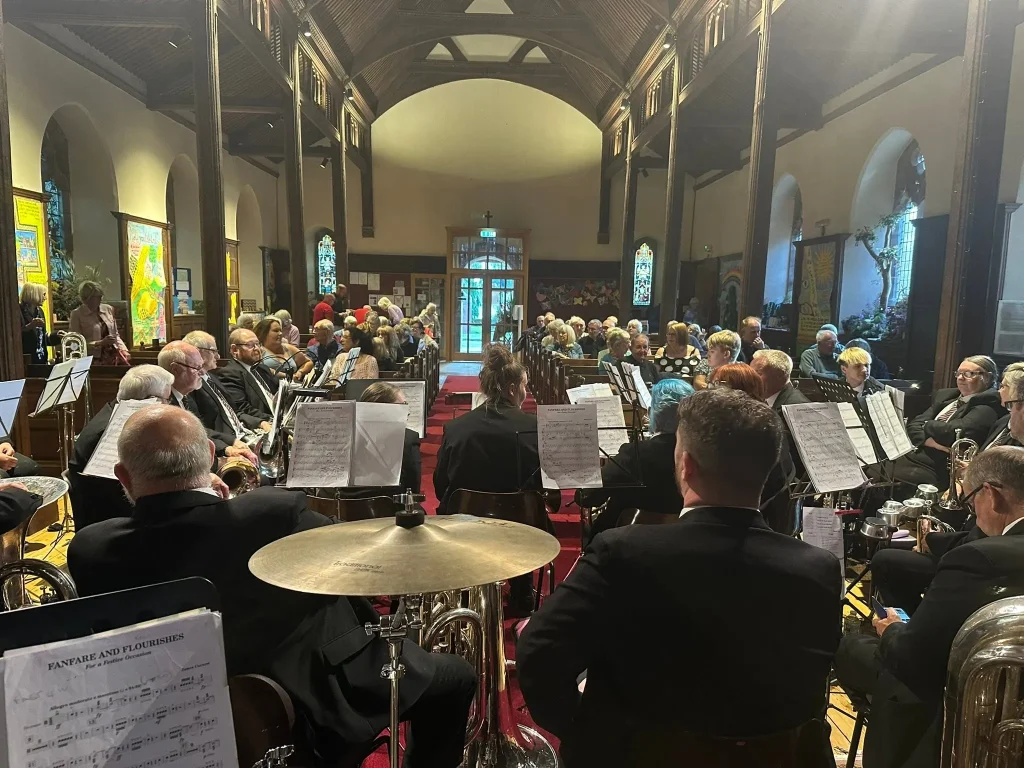
Many pit villages in the North East had a band of their own. Colliery bands were at the heart of village life: they led parades and galas, played for chapels and on bandstands, and gave working people, who had little access to formal arts provision, a shared voice, a source of local pride and a reason to come together.
A people’s music
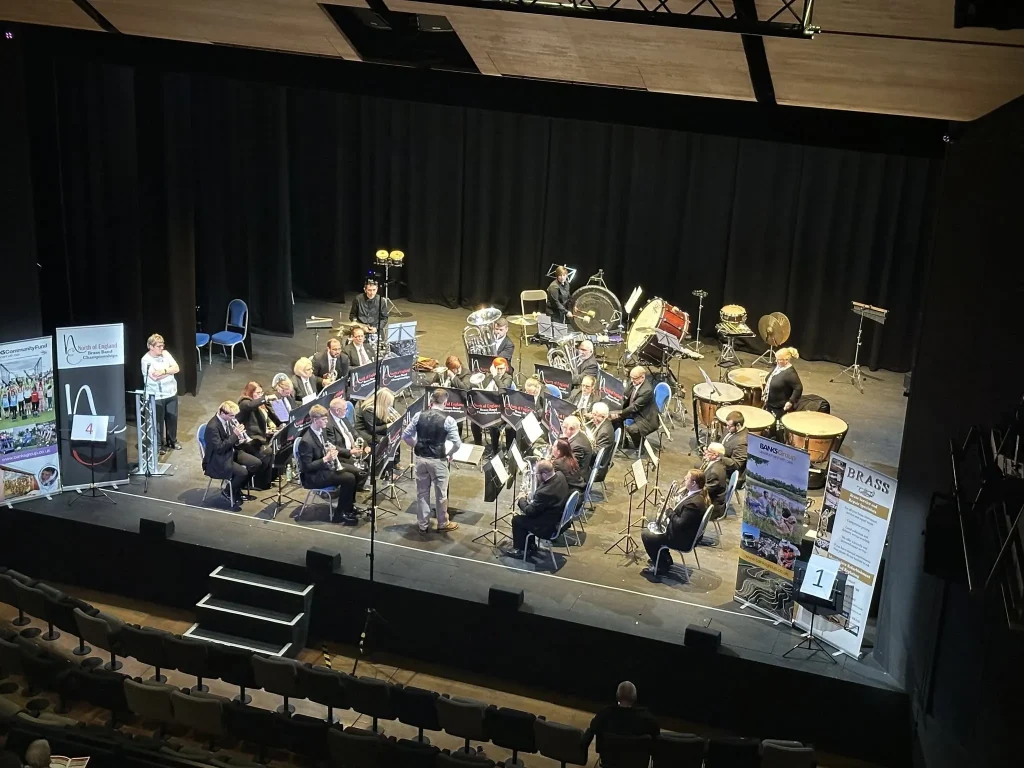
The modern brass band was born in the nineteenth century, when valves made brass instruments fully melodic and Adolphe Sax’s family of saxhorns gave bands a matched, homogeneous sound. A standard brass band today has around 25 players: soprano cornet, cornets, flugel horn, tenor horns, baritones, euphoniums, trombones, E♭ and B♭ basses, plus percussion. It is a line-up that has barely changed in over a century.
Backworth’s story
Backworth’s band followed a familiar path. It began as a wind band, with clarinets and flutes alongside the brass, and became wholly brass in the 1920s. It drew its players from the mining community, rehearsed for nearly 80 years at the Miners’ Welfare, and hosted brass band contests of its own in Backworth in 1898 and 1902.
Contests gave bands a standard to aim for and villages a source of pride. Backworth’s record includes a win at Cramlington in 1883, a First Section win at Newcastle in 1904, regular appearances at the Crystal Palace national contests in the 1930s and the North of England title in 1949. See the highlights on our contests page.
After the pits
As the pits closed, many colliery bands closed with them. Others, like Backworth, became community bands: their players now come from all walks of life, but the colliery name and the tradition behind it remain. The North East is widely regarded as a spiritual home of the brass band movement, and bands like Backworth carry that tradition forward, playing at the Durham Miners’ Gala and in the communities the pits once supported.
New to brass bands? Start with What Is a Colliery Band?
If you would like to be part of it, our Training Band welcomes beginners, and experienced players can join the band.
Read more: Remembering Backworth Colliery, the pits that gave the band its name.