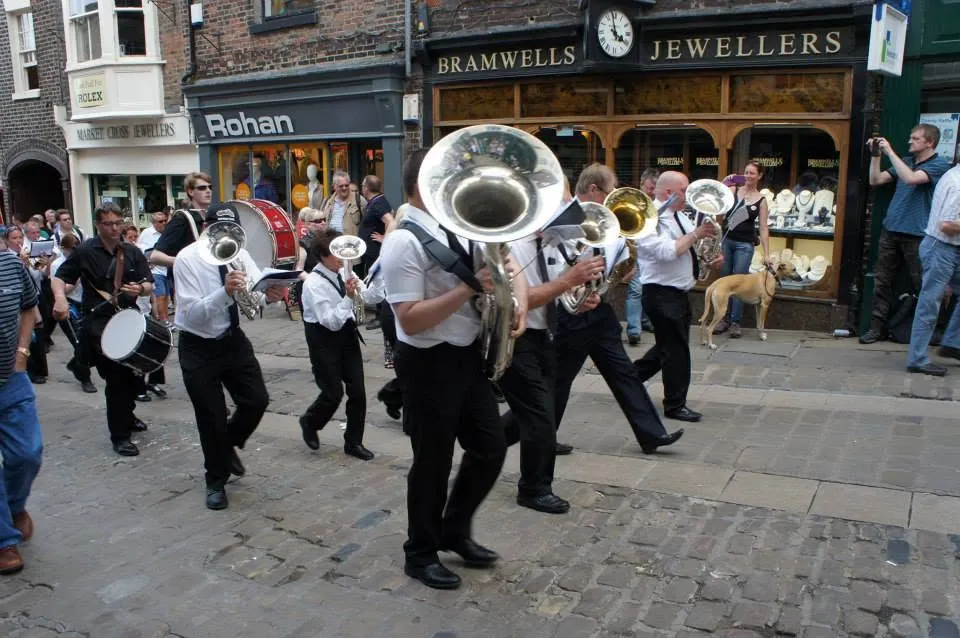
Backworth Colliery Band takes its name from the pits that shaped Backworth for more than 160 years. The band is one of the few living links to that history.
Sinking the first pit
Coal was mined around Backworth from the early 1700s, but the village itself sat beyond a major geological fault that hid its coal far below the surface. In 1812 a group of partners led by the mining engineer John Buddle leased the Backworth royalty from the Duke of Northumberland, and ground was broken on the first pit, the ‘A’ Pit, in 1813. Coal was first drawn in 1818 and carried by waggonway to the River Tyne.
A network of pits
Over the following century the Backworth enterprise grew into a network of pits, including the Maude, the Algernon, the Fenwick and the Eccles, linked by the company’s own railway to staithes on the Tyne. New villages were built at Backworth, East Holywell, Holywell and Shiremoor to house the growing workforce. The Eccles Pit, sunk between 1905 and 1906, was the deepest in the Northumberland coalfield at 1,440 feet.
A band for the colliery
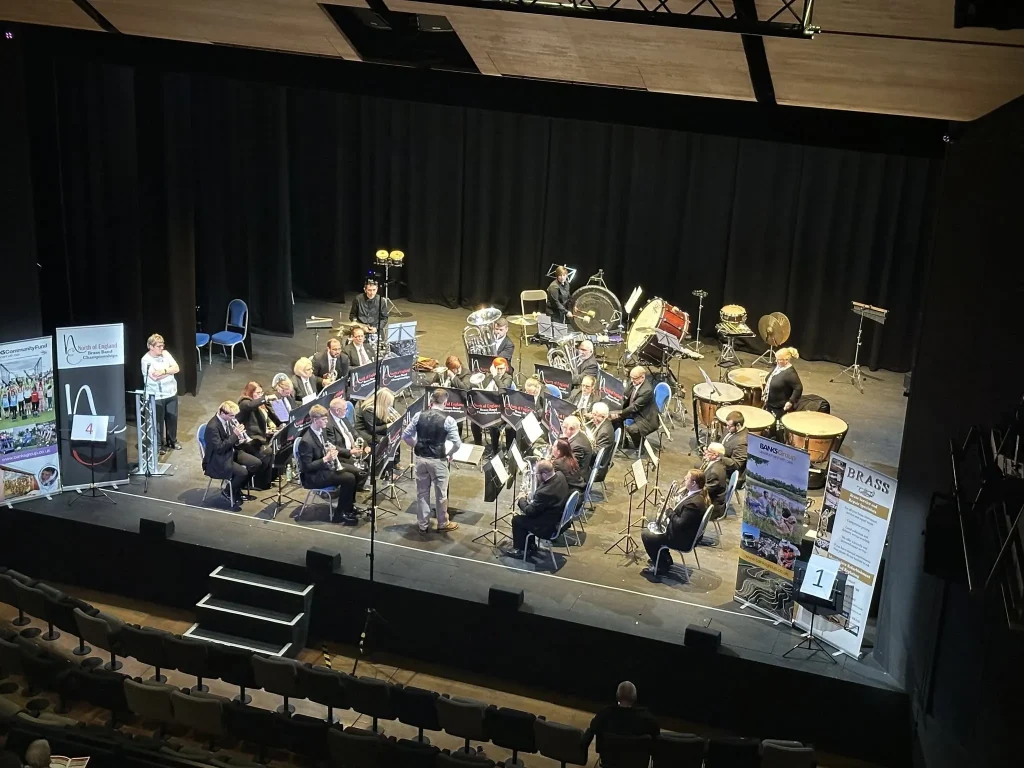
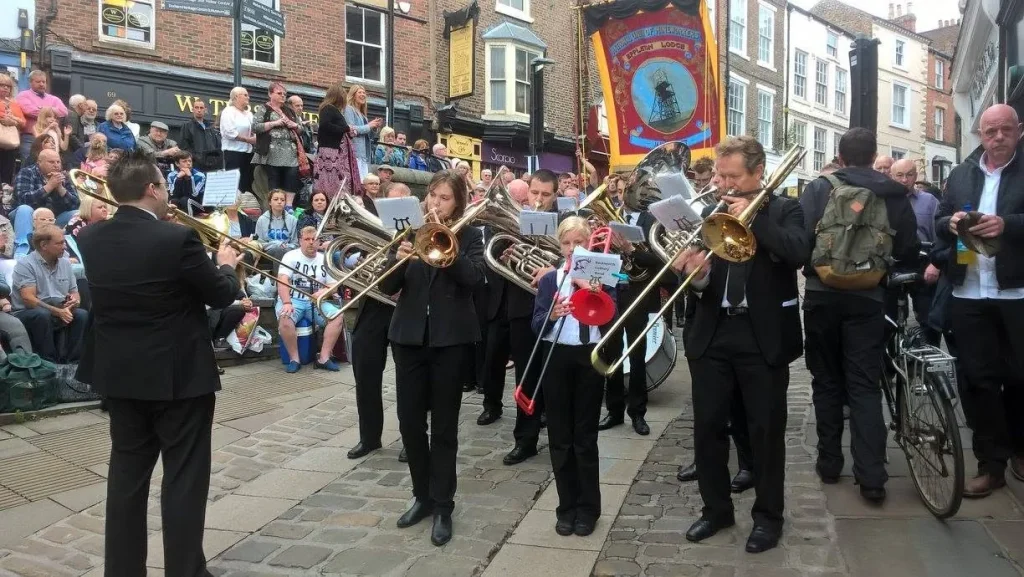
The band grew out of the social life around the collieries. A band from Backworth is recorded at a contest in North Shields in 1878, and the band was formally established in 1886 as Backworth Institute. Its players were traditionally drawn from the mining community, and for nearly 80 years it rehearsed at the Miners’ Welfare in Backworth.
The pits closed
After nationalisation in 1947 the pits were gradually closed or combined. The Eccles was the last to go, in May 1980, ending 167 years of unbroken deep mining at Backworth. Little remains above ground today, though several of the colliery’s steam locomotives survive in preservation, most notably at the Tanfield Railway.
The pits closed, but the band played on. Read the full story on our history page.